August 14, 2026
Curtains and Textiles: a Guide to the Interior's Final Layer
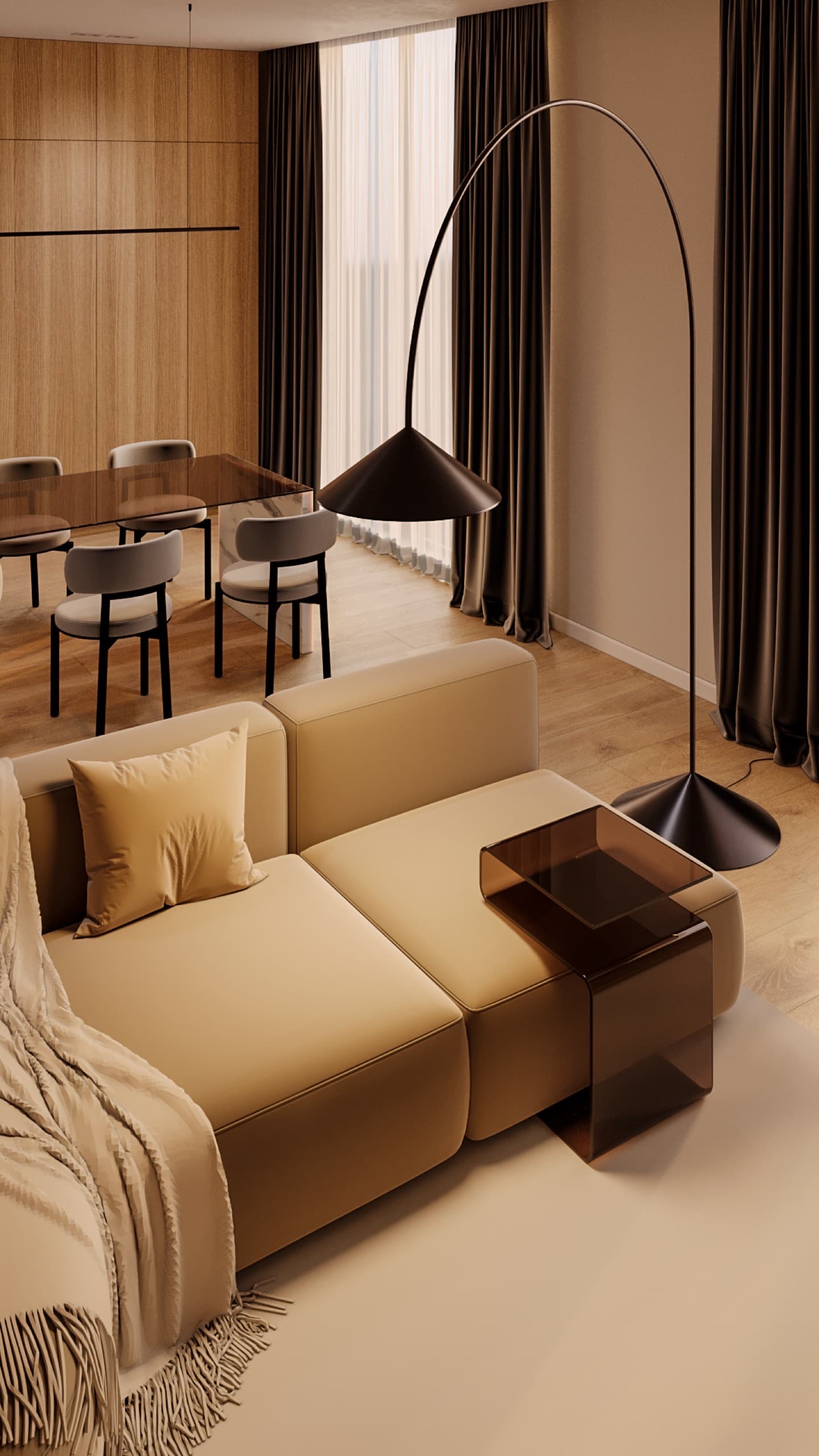
Curtains are hung last and planned first: the niche for a hidden track goes into the ceiling at the rough stage, and after finishing you cannot get that option back. That is why textiles are present in our projects from the first visualization, not added "somehow later".
In this article we go through curtain geometry, choosing a track, fabrics and layers, textiles room by room, and the mistakes that most often spoil even an expensive renovation.
Curtain geometry
Three rules that change everything. First: the track runs from wall to wall or extends well beyond the window, not just the width of the frame. The window looks bigger, the wall higher, and open curtains fully clear the glass. Second: the panel runs from ceiling to floor, no "to the sill", unless there is a radiator or furniture under the window. Third: there must be plenty of fabric; folds should be deep, and a stretched panel looks poor.
If the track is still set to the window width, the rule of thumb is this: track length equals window width plus 30–40 cm. Then open curtains barely cover the glass. The track extends beyond the frame by about 10–15 cm on each side. This is a common guideline rather than a standard, so always adjust the final length to the room.
Height and length
A classic track height is about 10–15 cm above the window frame. In projects with low ceilings we more often raise the track right up to the ceiling or hide it in a niche: the eye is drawn upward and the ceiling feels higher.
There is no single standard for panel length. For practical curtains in an apartment, a gap of 1–2 cm above the floor is common: the fabric moves easily and does not collect dust. Curtains that pool on the floor need an extra allowance of roughly 2 to 10 cm and suit bedrooms and living rooms where fullness matters, but not kitchens or children's rooms. Do not forget to subtract the height of rings, tape or hooks in the calculation.
Which track to choose
A hidden track in a ceiling niche is the cleanest option: curtains seem to grow from the ceiling and only fabric is visible. It must be planned early, at the rough stage, together with the ceiling. A ceiling-mounted profile track is a practical replacement when there is no niche: it is light and looks neat. A wall-mounted track with a rod or cornice is a classic and suits interiors with an emphasis on decor.
Load and fixing depend on the weight of the curtains. A heavy lined drape needs reinforced fixing and a solid base: in plasterboard you need blocking, not just plugs. The drive type should also be chosen in advance: an electric track needs a socket or power provision near the niche. This is easy to include in the electrical plan but impossible to add after renovation without chasing the walls.
Fabrics and layers
The classic pair is sheer plus drape: day and evening. The sheer diffuses light and hides you from outsiders; the drape closes in the evening. In the bedroom, blackout is added: a dense layer that blocks light. We discussed its role for sleep in the article on bedroom design. Blackout can be a drape lining or a separate panel.
Linen and cotton give a relaxed, natural fold. Velvet gives a formal and heavy one. Blended fabrics are more practical than natural ones: they crease less and hold their shape longer. For the kitchen choose fabrics that wash easily, or use Roman and roller blinds that do not hang by the stove.
Take the curtain colour one tone lighter or darker than the walls so it blends softly into the interior. Matching the wall completely or contrasting fully should be a conscious choice. If the windows have a bright print, the rest of the room should be calmer.
Textiles room by room
Living room: full curtains along the whole wall, light fabric that changes the light by day and evening. Bedroom: blackout and a soft drape, a rug by the bed, bedding in tone. Children's room: simple, washable fabrics with no long cords near the cot, for safety. Kitchen: short or Roman blinds, treated fabric that is easy to maintain. Study: roller blinds or slats that do not glare on the screen.
If there is a radiator under the window, long curtains block the heat. Then choose curtains to the sill or leave the radiator free space. This is one of the few cases where "to the sill" is justified.
Textiles beyond curtains
Three textile points in a room are the minimum for an interior to look complete: curtains, a rug and cushions or a throw. The rug grounds the furniture: the front legs of sofas and armchairs are best placed on it. Cushions repeat one or two colours from the room and add texture. A throw and a bedspread create comfort and change by season.
Textures matter more than colour. One material repeated three times looks dull, so mix smooth, knitted and pile, but keep the colour in one palette.
Typical mistakes
A track at window width and curtains "to the sill" in a room without a radiator. Too little fabric and stretched folds. Curtains that stop several centimetres short of the floor. Heavy fabric on weak fixings. No blackout in the bedroom, so the dawn wakes you. A busy print on all windows and all cushions at once. No place for an electric track after the renovation.
Almost all of these are solved at the project stage: we show windows with curtains in the visualizations and place niches and power in the drawings.
Conclusion
Curtains are the last layer of the interior, but they must be thought through from the very start. Decide the track type, height and layers before the rough works and the result will look whole. If you want textiles to be part of the project, fill in the project brief or message us on WhatsApp.
READ ALSO
Wallpaper in a Modern Interior: an Accent, Not a Background — How to Choose and Where to Hang
How to Choose a Sofa: Size, Filling, Fabric — and Why Sitting on It Is Mandatory
The Bed and Mattress: How to Choose What You Spend a Third of Your Life On