July 3, 2026
How to Choose a Sofa: Size, Filling, Fabric — and Why Sitting on It Is Mandatory
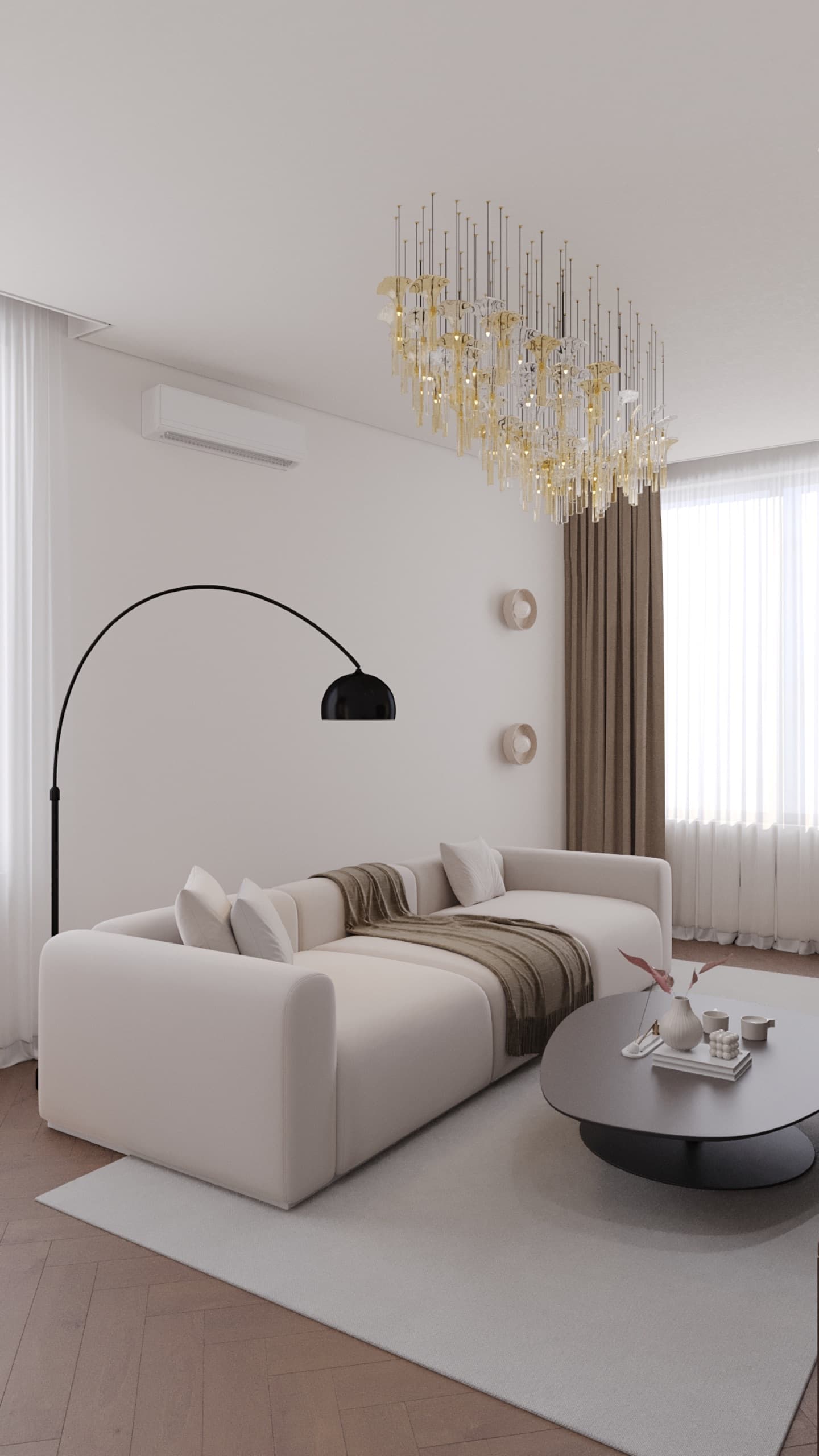
A sofa is bought for 8–12 years and used for hours every day. Yet it is usually chosen by photo and price, and six months later it turns out to be uncomfortable, the fabric pills and getting it into the lift was a battle. A sofa is not a picture but a tool for rest, and it should be tested like a tool.
When we do procurement for a design project, sofas are chosen by our own list: size and seat first, then filling and frame, then fabric, and looks only at the end. Here is that list with dimensions and explanations so you can go through it yourself.
Step 1. Size for your room, not the showroom
In a showroom with five-metre ceilings any sofa looks compact. At home the same sofa can take half the room. So we start with the plan: measure the wall, mark doors, windows, radiators and sockets. The clearest method is to tape the sofa outline on the floor with masking tape and live with it for a couple of days.
Clearances. Between the sofa and other furniture we allow at least 70 cm, and 80–90 cm for the main route through the room. From the seat edge to the coffee table, 40–45 cm is usual: you can reach your cup without your legs hitting the table. If the sofa backs onto a passage, as in a studio, the back must look neat from both sides.
Delivery. Check the width of the front door, lift, stair flight and corridor turns. The key number is the sofa's diagonal in profile, compared with the opening width. Modular sofas and models with removable legs and arms get through where a one-piece sofa will not. Lifts in new buildings usually take a standard sofa, but a one-piece corner unit is another story.
Step 2. The seat: depth, height, firmness
Seat depth is the main comfort parameter. Standard depth is about 53–61 cm: you sit upright against the back with your feet on the floor. Deep models, from 64 cm, suit people who like to curl up and tall people. A shorter person on a deep sofa cannot reach the back without a cushion behind them.
Seat height. The usual range is about 43–48 cm from the floor to the top of the cushion. Low lounge models at 38–43 cm look contemporary but are hard to get out of for older relatives and people with bad knees. If the family includes an older generation, choose a higher seat and arms you can push up from.
Firmness. A soft sofa is pleasant for five minutes, but your back sinks. A very firm one is tiring. Ideal is a resilient seat that gives slightly and springs right back. The showroom rule is strict: sit for at least ten minutes as you would at home, leaning back, legs up, sideways. Wear the clothes you lounge in and bring whoever will use the sofa.
Step 3. Frame and filling
Frame. Good frames are made of solid hardwood, plywood or a mix. Chipboard in load-bearing joints is a sign of a budget model: fixings loosen over time and the sofa starts creaking. Ask what the frame is made of and look underneath if possible.
Seat base: webbing, serpentine springs or a pocket spring unit. Elastic webbing gives a soft seat; serpentine springs a firmer, longer-lasting one. A pocket spring unit combined with foam gives an even, breathable seat and spreads weight better when several people sit together.
Filling. Most seats are based on polyurethane foam. Seats use denser, firmer grades: for example, HL foam at around 35 kg/m³ is designed for higher loads. Backs and arms suit soft high-resilience HR grades. Cheap low-density foam sags within a year or two. Ask for the foam grade and density: it is a normal question and serious manufacturers answer it. Feather and down cushions give a soft relaxed look but need plumping.
Step 4. Fabric: durability and care
Fabric durability is measured by the Martindale test: how many rub cycles a material withstands before visible wear. Rough guide: 10,000–15,000 cycles for occasionally used furniture; 15,000–25,000 for a normal family sofa; 25,000–30,000 and up for heavy use, large families and pets. A sofa bed opened daily should also have fabric from 25,000 cycles. It is guidance, not a lifespan guarantee.
Fabric types. Basket weave is dense and durable, but cats love to scratch it. Velour and micro-velour are soft and, in modern versions, quite practical. Chenille is warm and soft, but its loops snag. Bouclé is fashionable and textured but shows pet hair. Leather lasts but feels cold in winter and needs care. Water-repellent treated fabrics are a good choice for families with children.
Removable covers are an underrated blessing. They can be washed or dry-cleaned, and after a few years replaced for an almost new sofa. Before buying, take a fabric sample home and look at it in daylight and evening light next to your floor and walls.
Step 5. Shape and mechanism
Straight, corner or modular. A straight sofa is versatile and easier to deliver. A corner sofa uses the corner and seats more people but locks in the layout. A modular sofa is assembled from sections and adapts to a move or new layout. In an open kitchen-living room the sofa often acts as the zone boundary, and its shape defines how the whole room works.
A fold-out mechanism is only worth it if the sofa really will be a bed. A sofa bed is always a compromise: worse to sit on than a regular sofa and worse to sleep on than a bed with a good mattress. If guests stay a couple of times a year, a comfortable regular sofa and a quality air mattress are smarter. If it opens daily, look for a mechanism with a separate mattress and check how much floor it needs when open.
Common mistakes
Bought by photo without sitting on it. The biggest corner sofa in a small living room, leaving a 50 cm passage. Light bouclé with a dog in the house. A sofa bed bought just in case, with an uncomfortable seat every day. No delivery check, so the door frame had to come out.
Another mistake is choosing the sofa separately from the interior. A colour that looked right in the showroom becomes a different colour at home under other light and next to your floor. In our projects the sofa is chosen together with the floor, curtains, rug and lighting, and with online procurement the client gets a link to a specific model with dimensions.
Buying checklist
Before paying, check that the size fits the plan with clearances of at least 70 cm; the sofa passes the door and lift diagonally; seat depth and height suit everyone in the family; you sat on it for at least ten minutes; you know the frame material, base type and foam grade; the fabric's Martindale rating fits and you have a sample; covers are removable or care is clear; warranty terms and delivery dates are in the contract.
Conclusion
A good sofa is chosen with your body and a tape measure, not your eyes. First the plan and clearances, then the seat, then frame and filling, fabric for your lifestyle, and colour and shape last. If you want the sofa to fit straight into the overall interior, we will select it as part of a design project with online procurement. Our What Is Your Style quiz helps you find your direction, and you can message us on WhatsApp with any questions.
READ ALSO
Wallpaper in a Modern Interior: an Accent, Not a Background — How to Choose and Where to Hang
Curtains and Textiles: a Guide to the Interior's Final Layer
The Bed and Mattress: How to Choose What You Spend a Third of Your Life On