June 29, 2026
Finishing Materials: What to Choose for Floors, Walls and the Bathroom — a No-Ads Guide
Materials are a large share of the renovation budget and the main field for mistakes. A material that looks great in a showroom may not survive its first winter of dry heated air or its first year with a dog. Here are the main groups the way we explain them to clients during procurement: brand-free, with the questions worth asking the seller.
The main rule is to decide how you live first and look at samples second. Kids, pets, a habit of walking around in street shoes, underfloor heating, a sunny side — all of this affects the choice more than a fashionable colour.
Floors: parquet, laminate, LVT
Engineered parquet is the benchmark for look and feel (the herringbone from our projects, for example Besagash). It is afraid of water and sudden humidity swings, but scratches can be sanded out and the surface refreshed. In winter in Almaty and Astana, indoor humidity matters: with very dry radiator air any parquet opens up gaps, so a humidifier is part of owning it.
Laminate is the workhorse. For living spaces people usually choose abrasion classes 32 and 33: 32 suits living rooms and bedrooms, 33 suits hallways, kitchens and high-traffic zones. It is cheaper than parquet and scratch-resistant, but louder underfoot and it does not survive flooding: swollen edges cannot be reversed. Look at the core thickness, the locking system and the underlay, which affects noise more than you would think.
LVT/SPC (often sold as quartz vinyl) is the practicality champion for families with kids and pets: quiet, warm to the touch, unafraid of water. It comes soft (LVT) or rigid (SPC), and sellers use the names loosely, so ask which one it is. Click-lock planks are typically 3.5 to 5 mm thick; very thin ones have a fragile lock. The downside: not every pattern is convincing, so choose bevelled edges and deep wood texture.
If the project has underfloor heating, check the allowed surface temperature in the instructions of your exact flooring: laminate and vinyl have limits, and many installers keep floors well below the maximum. One more rule: in wet zones use only tile or porcelain.
Walls: paint versus wallpaper
Paint is the choice in most of our projects: easy to repair (touching up a scratch takes minutes), any colour, a refined matte texture. Its main drawback is that it demands a perfect base. Every bump, putty seam or wave shows in side light from a window or track lights, so saving on wall preparation comes back as disappointment with the result.
For the kitchen, hallway and kids’ room choose washable paints rather than plain interior ones: they tolerate wet cleaning. A deep matt finish is often less stain-resistant than a satin one, so discuss it beforehand. Always paint a test patch on the wall itself and look at it in the morning and evening, because colour in the tin and on the wall are different.
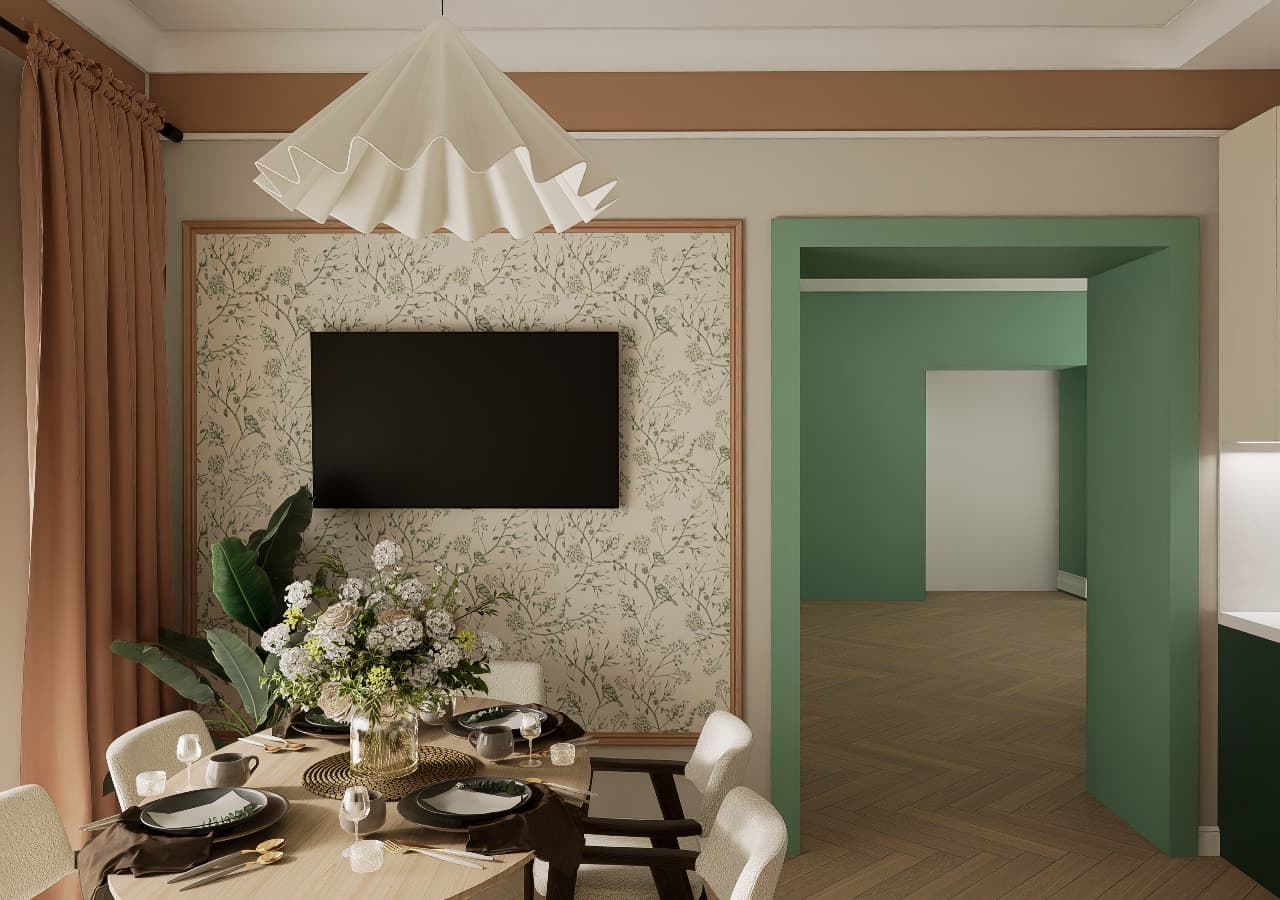
Wallpaper is returning as an accent: textured and botanical, as in our country-house kitchen-living room project, on one wall or in a niche rather than across the whole flat. Non-woven paintable wallpaper is a compromise when you want texture but may change colour later. Mouldings and wall panels add architecture where walls feel dull and protect the area by furniture and doors.
Bathroom: tile and porcelain
Porcelain stoneware is stronger than ordinary tile and barely absorbs water: its water absorption is generally no higher than 0.5%. Use it for the bathroom floor, with a slip-resistant surface. Gloss looks lovely on walls but is dangerous on a wet floor. Check the slip rating in the manufacturer’s data.
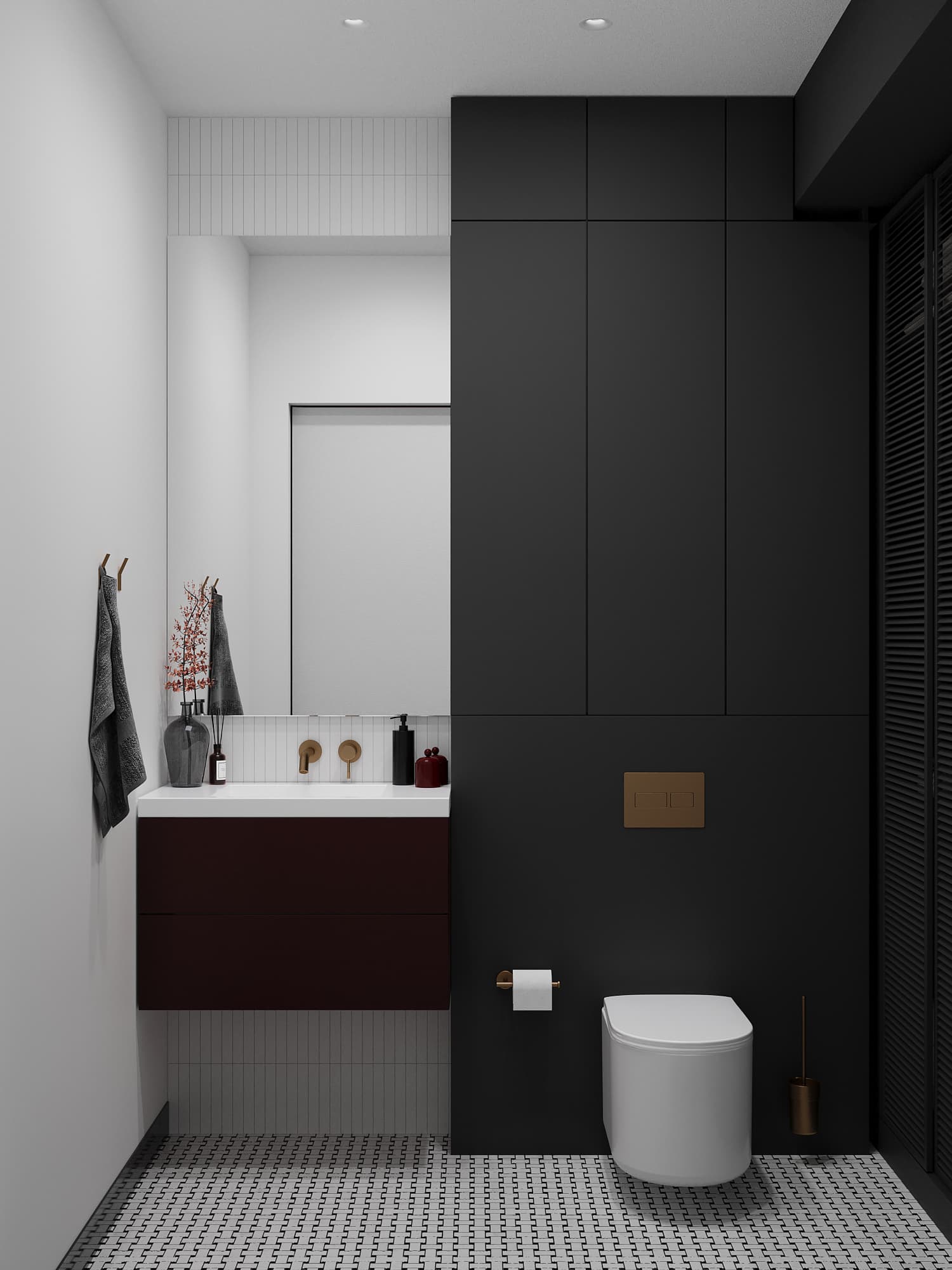
Format sets the perception. Large (for example 60×120) minimises joints and stretches the space; small zellige-style tile and mosaic give rhythm, like the burgundy tile in the bathroom of our Dauir project. In a small bathroom large tiles on the wall look calmer, but they need a flatter base and precise laying.
Grout ages first. Cement grout absorbs dirt and darkens over time; two-component epoxy grout barely absorbs water and holds colour better, but it is harder to work with, needs an experienced installer and the temperature range in its instructions. Choose grout colour to match the tile: a contrasting joint emphasises the pattern, a close tone calms it.
Waterproofing is the one thing you must never save on. It is the only layer that protects you from a renovation at your downstairs neighbours’ and from mould in the screed. It goes on the floor and the walls in the shower or bath area, with a return up the walls and careful treatment of corners and pipe penetrations. Ask the contractor which product they use and how they check the result.
Where to save and where not to
You can save on decor and secondary furniture, which are easy to replace later. You need not overpay for a tile brand if the specifications match: check water absorption, wear class and size calibre. You can use simpler finishes in a storage room or walk-in closet.
Do not save on wall preparation, waterproofing, the floor screed, door hardware, taps and anything you touch every day. A mistake in hidden layers costs many times more than the price difference of a pretty surface, and it is hard to fix without tearing the renovation apart.
How we choose materials in a project
A design project includes an online shopping list and a wall finish schedule, and during supervision we help select finishing materials and check samples on site. A good order is: first life scenarios, then a budget by group, then 2–3 options for each item at different prices.
For the overall budget, use the renovation budget calculator on the site; the Prices section shows what a project costs. If you want to sort out materials for your flat, fill in the brief or message us on WhatsApp — we will help you decide where to draw the line on budget and where never to cut corners.
READ ALSO
Wallpaper in a Modern Interior: an Accent, Not a Background — How to Choose and Where to Hang
Curtains and Textiles: a Guide to the Interior's Final Layer
How to Choose a Sofa: Size, Filling, Fabric — and Why Sitting on It Is Mandatory