April 1, 2026
Art in the Interior: How to Choose, Hang and Light a Painting
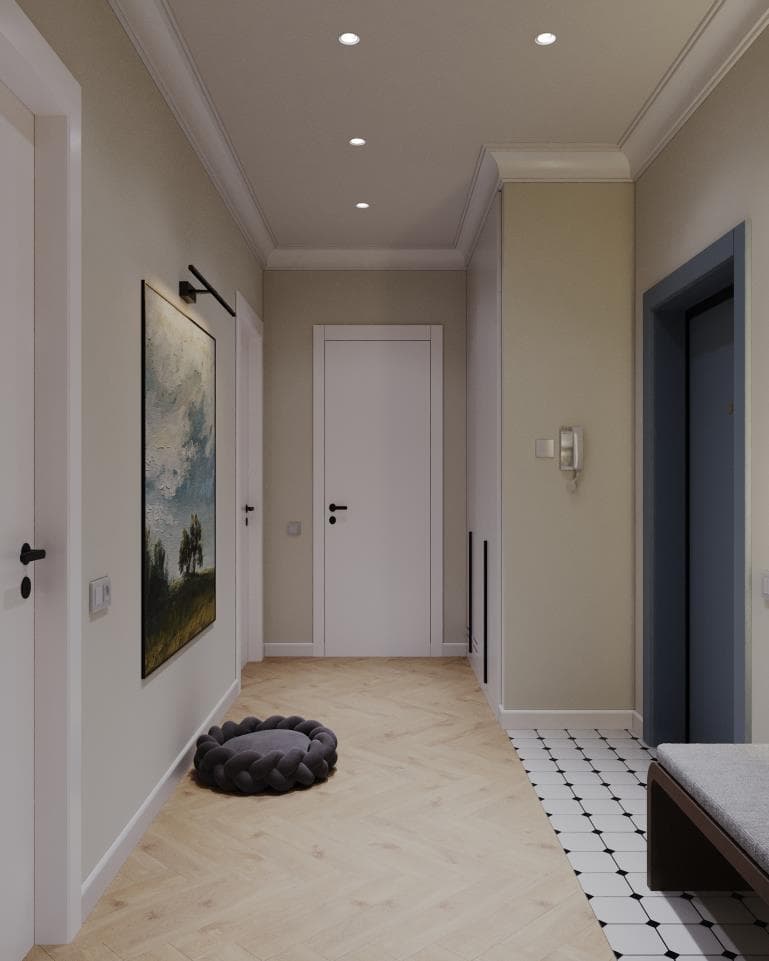
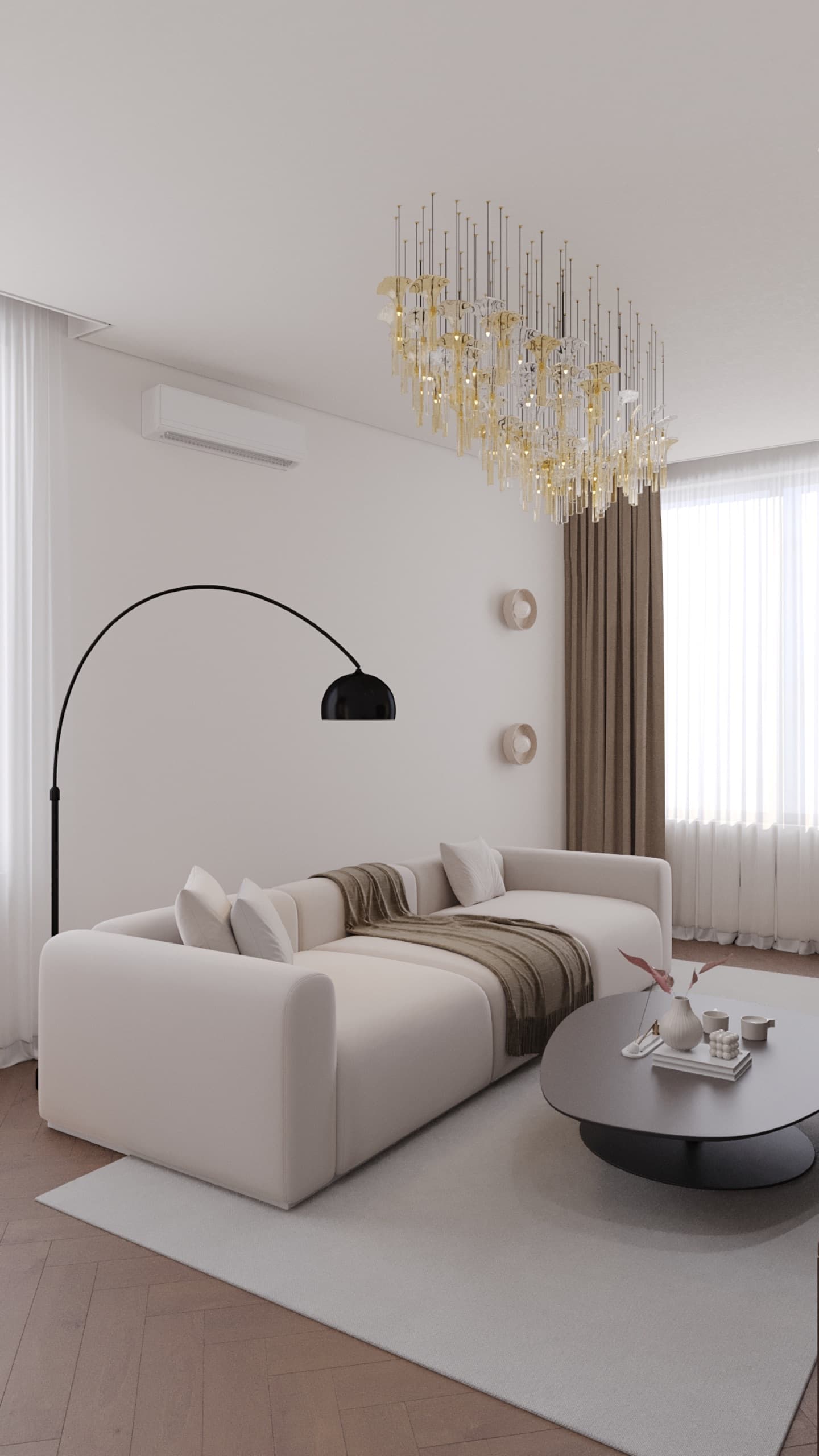
In our studio art is not a final touch but part of the concept. The studio's founder, Anel Turganbayeva, paints original works for interiors, and we see how one right piece changes a room more than expensive finishes do. Art is the shortest route from "a nice renovation" to "my home".
Yet a painting is easy to spoil: hung too high, too small for a big wall, placed in direct sun or lit so that all you see is glare. This article gathers practical rules: how to choose, at what height to hang, how to build a gallery wall, what to fix it with and how to light it.
How to choose art for an interior
The main rule: a piece does not have to "match the sofa". It should move you. The connection with the room comes from one shared note: a colour repeated in textiles, a texture, a mood. If a painting matches the palette completely, it dissolves. A little contrast makes it visible.
What you can hang: original paintings, drawings, limited-edition prints, photography, posters, textile panels, wall ceramics. An original is always more valuable: it has brushstroke texture that print cannot convey. But a good poster in the right frame beats a random "decor painting" from a hypermarket.
Think about the whole room. In a bedroom, calm subjects and a soft palette; in a living room you can afford a large, bold work; in the hallway, something you are glad to see when you come home. Kitchens and bathrooms have humidity and temperature swings, so do not hang valuable originals there.
At what height to hang
In museums and galleries the centre of a work is usually placed at roughly eye level, about 145–150 cm from the floor. The rule works at home too, when a painting hangs on a free wall. Note that this height refers to the centre of the work, not its top edge or the hook.
Above furniture the reference changes: the distance to the sofa back, headboard or chest matters more. Usually about 15–25 cm is left between the bottom of the frame and the furniture. Higher, and the picture floats off on its own; lower, and it gets in the way and bumped by heads.
In rooms where people mostly sit, such as a dining room or study, a work can go a little lower, because a seated person's eye line is lower. With high ceilings, do not raise the painting to follow the ceiling: hang for people, not for the wall.
Scale: painting size and wall size
A common mistake is a small picture on a big wall. It gets lost and looks accidental. Above a sofa or bed, a work or group usually spans about two-thirds of the furniture width. For a 240 cm sofa that is around 160 cm: one large piece, a diptych or a group.
If you have no large original, there are options: a diptych or triptych in matching frames, a gallery wall, a large frame with a wide mat around a small work. The mat adds breathing room and visually enlarges the format. Narrow wall sections suit vertical formats; a long sideboard suits horizontal ones.
Gallery wall: building it without extra holes
First lay out the composition on the floor, or cut paper templates to frame size and tape them to the wall with painter's tape. You see how it looks before the first hole. The gap between frames is usually kept equal, about 5–8 cm, so the group reads as one.
Align the composition on a central axis, not on the top edge: the centre of the whole group sits at the same 145–150 cm, or 15–25 cm above furniture. For a calm look use a grid of identical frames. For a livelier one, a free arrangement of different formats, but with a common element: the same frame colour, one palette or one theme.
Start with the largest piece near the centre, then add smaller ones around it. There is no need to fill the wall at once: a good gallery wall grows over years.
Fixings: what to hang it on
The fixing depends on the weight of the work and the wall type. Light posters in thin frames can go on adhesive hanging systems, but originals and heavy frames need mechanical fixings. In concrete and brick: a wall plug and screw. In drywall: hollow-wall anchors such as butterfly or molly types, and for heavy works it is better to build in a backing board when the partition is installed.
If you like to change the display, consider a picture rail system: a track near the ceiling with cables and hooks. It lets you rehang works without new holes. It is easy to plan into the ceiling design so it is almost invisible.
Two fixing points are better than one: the picture will not tilt. Before drilling, check for wiring in the wall, especially above sockets and switches.
Lighting without glare
Light makes a painting the focus of the room. Options: an adjustable spot on a track or recessed in the ceiling, a picture light above the frame, sconces on both sides. Directed light is usually aimed at about 30 degrees to the wall, which reduces glare, especially if the work is behind glass.
Use LED lamps: they barely heat up and emit minimal ultraviolet, which fades pigments. Choose lamps with a high colour rendering index, CRI 90 or above, or colours will look dull. For art at home, warm light of about 2700–3000 K usually works.
If you want picture lighting, plan it into the project early: a power outlet above the frame or a track in the right place. Otherwise you will have to chase the wall or run a cable over the surface.
How to protect a work
The main enemies of art are direct sun, humidity and temperature swings. Do not hang originals opposite a window in direct rays, above radiators or near the hob. For works on paper and photographs use UV-protective glazing and an acid-free mat.
Dust canvases only with a dry soft brush, no water or cleaners. If a work is valuable, take it down and pack it during moves and renovations: plaster and sanding dust gets everywhere.
Common mistakes
Hanging too high is the most frequent mistake: the work floats toward the ceiling and loses its link with the furniture. A small format on a big wall. A painting chosen only to match the sofa. An empty wall left "for later" that stays empty. Lighting that puts a hotspot right in the middle of the work. And skimping on the frame: a cheap frame devalues even a good piece.
Art in our projects
We plan places for art at the layout stage: free walls of the right size, lighting, fixings. Our project questionnaire asks how you feel about art. If you would like a work painted especially for your interior, mark it: Anel paints original pieces for a specific space, and no one else will have that detail.
Summary
A well-hung painting means its centre at eye level, the right scale, secure fixings and soft directed light. Choose what moves you and give the work room to breathe. If you want art planned into your interior from the start, fill in the brief on our site or message us on WhatsApp.