May 2, 2026
Kitchen Fronts: Paint, PVC Film, HPL, Veneer or Acrylic — What to Choose
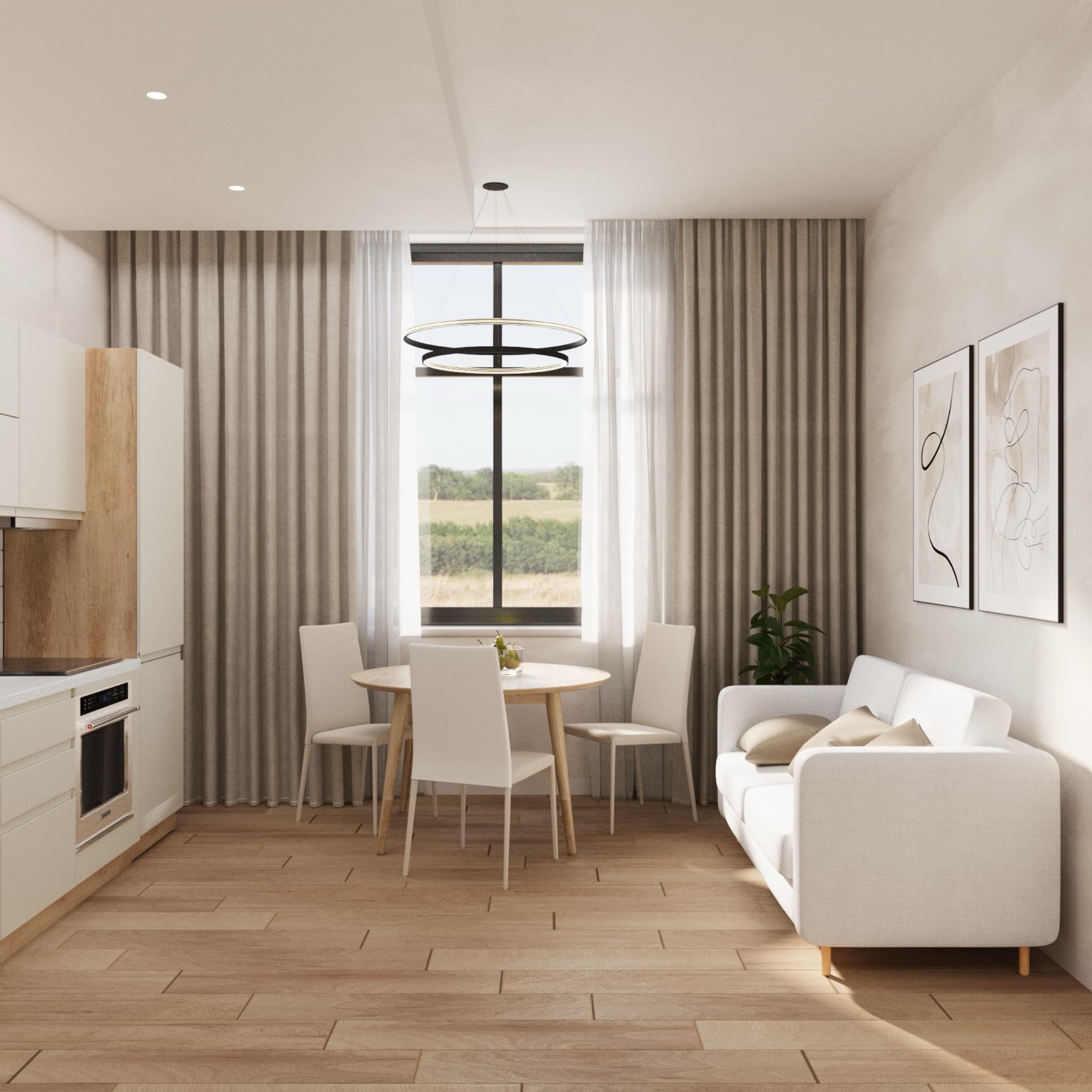
When joiners quote a kitchen, the main price fork is the front material. Carcasses are similar in most kitchens, while fronts define both the look and how the kitchen will hold up in five years. On the same kitchen, the gap between the cheapest and the most expensive fronts can be several times over.
Below we look at six popular materials without favoring any showroom or brand: what they are made of, their strengths and weaknesses, how to care for them and which scenario each one suits. At the end you will find the mistakes we see most often in finished kitchens and a checklist for talking to your joiner.
PVC film on MDF
The most affordable option for both routed and flat fronts. An MDF board is vacuum-wrapped in film, so you can have raised panels or a wood or stone look. Modern films look decent, especially matte wood decors.
The main weakness is heat and steam. The film is held by glue, and high temperature softens it: next to an oven, above a kettle or above a dishwasher after opening, edges can bubble and peel. Manufacturers of such fronts state plainly that they should not be exposed to hot air for long and recommend leaving gaps around the oven. Peeled film is almost impossible to repair — the whole front gets replaced.
When to choose it: a tight budget, a rental apartment, a kitchen where little cooking happens. If you go with film, put the oven in a tall unit with proper gaps and do not place the kettle or multicooker directly under wall cabinets.
HPL laminate
HPL is high-pressure laminate glued onto MDF or chipboard, with the edges covered by edge banding. It is one of the most resistant materials to scratches, moisture, heat and household chemicals. HPL fronts suit intensive cooking and families with children.
The limits: the edge is visible, especially if it contrasts, and routing is impossible — fronts can only be flat. There are also premium matte laminates with an anti-fingerprint effect: manufacturers claim higher abrasion resistance, and on some of these surfaces micro-scratches can be repaired with heat. Check such properties with the specific manufacturer — ordinary HPL does not have them.
When to choose it: you cook a lot, want a practical kitchen for years and are happy with a clean look without routing.
Painted MDF (lacquer)
MDF fronts coated with primer, paint and lacquer in several layers. The main advantage is any color from a palette and any sheen, from deep matte to high gloss. The front can be routed: raised panels, fluting, rounded edges, an integrated handle. Painted fronts are what gives you a kitchen in the wall color that dissolves into the interior.
Paint is repairable: a craftsman can sand and touch up a small chip or scratch locally. The downside is that it needs careful cleaning — a soft cloth, a mild detergent, no abrasives or harsh sponges. Matte paint next to the hob wears faster and collects greasy marks, so in the work zone people sometimes choose a higher sheen or a splashback panel.
In our projects painted MDF is a frequent choice for minimalist and neoclassical kitchens. For a 40 m² kitchen-living room in a country house near Astana in soft neoclassical style, and for many city apartments, we specify color, sheen and routing in the drawings, and the joiner executes them.
Veneer
A thin slice of real wood on an MDF core, finished with lacquer or oil. It gives a living texture and warmth that film cannot really fake. Veneer usually costs more than paint and needs care: wood reacts to moisture and sunlight, so the finish must be good and fronts by the sink must have protected edges.
An important detail is grain matching: in a good kitchen the wood pattern flows continuously from one front to the next. This must be written into the brief for the joiner. In a 115 m² mid-century apartment in Bukhar Zhyrau Towers in Almaty, the kitchen is in warm walnut veneer, with a splashback and countertop in marble with red veining. In the 65 m² Mereke apartment, deep brown wood sets the character of the whole minimalist interior.
Acrylic
Acrylic fronts are MDF faced with an acrylic sheet that gives a deep mirror gloss. They look striking in contemporary kitchens and hold their color well. Quality matters: cast acrylic is denser and more scratch-resistant than cheap extruded acrylic, and the edge remains the weak spot.
The downside of gloss is visible fingerprints and smears, so acrylic needs frequent wiping. It is often used for wall cabinets, while the base units, which get touched more, are matte or in another material.
Melamine chipboard
Laminated chipboard is the most budget option, usually used for carcasses but sometimes for fronts too. The pluses are price and a wide range of decors. The minuses are flat fronts only and sensitivity to moisture: if water gets into the edge, the board swells. So chipboard fronts are best avoided above the dishwasher and next to the sink, and edges must be well sealed.
How to choose: start from your routine, not a sample
You cook a lot every day — HPL or painted MDF. You want an invisible kitchen in the wall color or routing — painted MDF. You want a warm natural look — veneer. You want striking gloss and do not mind wiping — acrylic. A strict budget — film or chipboard, plus open shelves instead of some wall cabinets.
Materials can be combined: base units in tough laminate or dark paint, wall units light in the wall color, an island in veneer. Fluted and slatted fronts add texture: in a 100 m² apartment on Seifullin Street in Almaty, fluted fronts together with marble and touches of brass create a quiet-luxury feel, and in the Taldykorgan apartment a floor-to-ceiling cabinet got slatted fronts with routed ventilation.
Think about handles. A Gola profile, an integrated routed handle, push-to-open or classic bar handles change both the look and comfort. Push-to-open is awkward for the dishwasher and the bin, which are opened often and sometimes with dirty hands — a profile or a handle works better there.
Hardware matters more than you think
Hinges and runners are what you touch twenty times a day. Soft-close hinges and drawers, full-extension drawers in the base units instead of shelves, and lift mechanisms for wall cabinets define how comfortable a kitchen is more than the front material does. On a tight budget it is better to save on fronts than on hardware: fronts can be replaced later, while weak runners spoil daily life.
Common mistakes
Film fronts next to an oven without gaps — bubbled edges within a year. Light matte fronts by the hob without protection — grease marks. Gloss on base units in a family with small kids — constant fingerprints. Different shades of white on fronts, countertop and appliances that you only notice after installation. Veneer without grain matching — the kitchen looks assembled from different batches.
Another frequent problem is the lack of drawings. The joiner designs the kitchen on site, and it turns out the sockets are behind a cabinet, the hood does not line up with the duct box and the dishwasher hits a pipe. The kitchen in the 67 m² Arena City Life apartment was assembled from our drawings without a single redo — precisely because sizes, details and materials were agreed in advance.
Checklist for talking to your joiner
Ask about the front core material and thickness; the finish type and sheen; the edge type and thickness; the brand and model of hinges and runners; how fronts are protected near the oven and dishwasher; the warranty against peeling and discoloration. Ask for a front sample in your chosen color and look at it in daylight and evening light next to samples of the countertop and splashback tile.
Our design project includes custom furniture drawings: kitchen elevations with sizes, details, materials and hardware. With them you can compare quotes from several joiners on the same brief.
Conclusion
There is no perfect material — only one that suits your cooking habits, budget and style. Film and chipboard save money, HPL is practical, paint gives color and routing, veneer brings natural warmth, acrylic delivers gloss. If you want your kitchen built without surprises, fill in the project brief or message us on WhatsApp. You can check your kitchen ergonomics with the Kitchen Ergonomics checklist on our website.
READ ALSO
Wallpaper in a Modern Interior: an Accent, Not a Background — How to Choose and Where to Hang
Curtains and Textiles: a Guide to the Interior's Final Layer
How to Choose a Sofa: Size, Filling, Fabric — and Why Sitting on It Is Mandatory