March 24, 2026
Eclectic Interior Design: How to Mix Styles Without a Hodgepodge
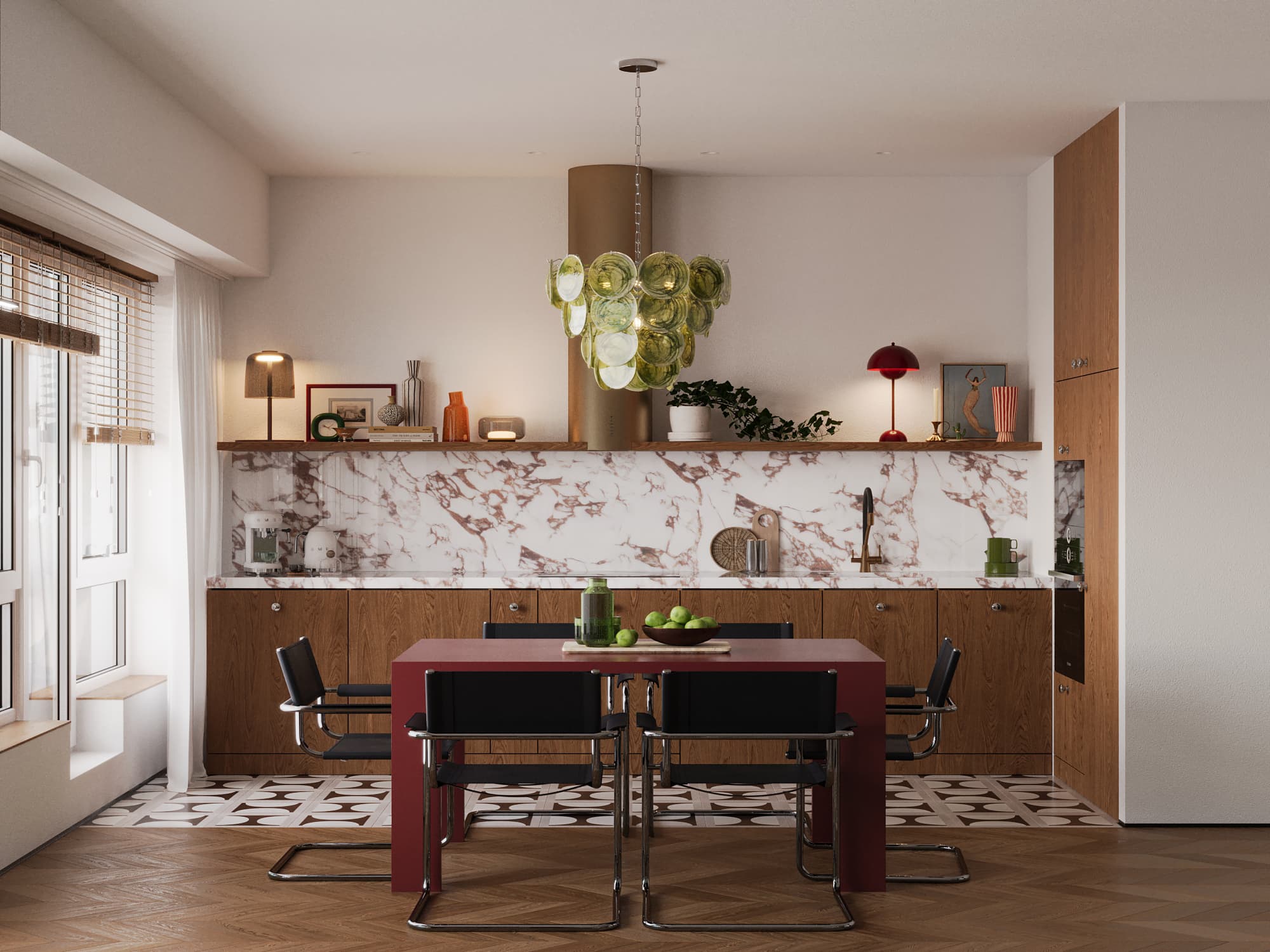
Pure styles belong in textbooks. Lived-in interiors today are almost always mixed: a modern base, a grandmother's chest of drawers, an oriental rug, a lamp from a flea market. This is how a home stops looking like a showroom and starts telling the story of its owners. But mixing only works by rules. Without them you get a storeroom of random objects, not eclecticism.
In this article we explain how good eclecticism works: what holds the mix together, how many styles you can combine, which pairs almost always work and which mistakes are the most common. The rules are simple and apply to a single room as well as a whole apartment.
What eclecticism is and how it differs from chaos
The word comes from the Greek eklektikos, "selective". In architecture, eclecticism refers to the second half of the 19th century, when elements of different historical styles were combined in one building. The key idea is choice: eclecticism does not mean "anything goes", it means "the best of different things, put together on purpose".
Telling eclecticism from chaos is easy. In an eclectic interior every object has a reason to be where it is: it repeats a color or echoes the shape or material of its neighbors. In chaos, things simply ended up next to each other. That is why eclecticism is one of the hardest approaches: it requires more decisions than any "pure" style, where the rules have already been written for you.
Rule 1. A shared palette is the main glue
Objects from different eras get along easily if they share one color range. A carved 19th-century armchair and a modern sofa look like a pair if both are in warm beige and cognac tones. The same set in red, green and blue with nothing linking them becomes noise.
A handy guide is the 60-30-10 rule, which designers use as a flexible hint rather than a formula. About 60% of the space takes the main, usually calm color: walls and large surfaces. About 30% goes to a secondary color: furniture, curtains, rug. About 10% is the accent: cushions, vases, art. The more varied the objects are in style, the stricter the palette should be.
A practical tip: before buying, put fabric samples, furniture photos and the wall paint swatch side by side. If a piece finds no "relative" by color in that selection, it will look out of place, however good it is on its own.
Rule 2. Repeat materials and shapes
The second binding tool is repetition. Brass that appears in a lamp, cabinet handles and a mirror frame ties pieces of different styles into one story. The same works with wood, marble, black metal and rattan. We usually make sure the key material appears in a room in at least two or three places: once is an accident, several times is intent.
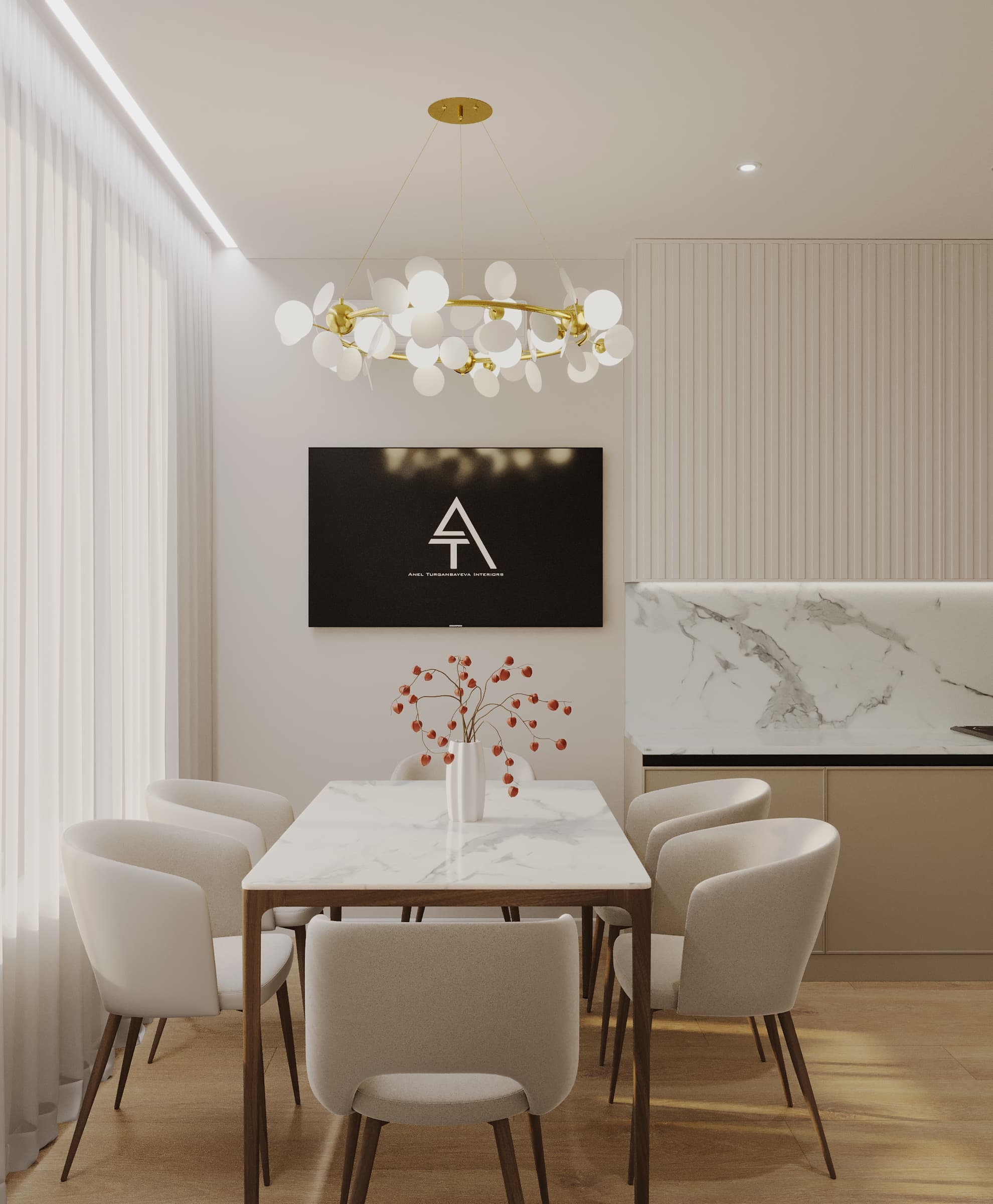
Shapes can repeat too. A round dining table, an arched mirror and a globe pendant get along even if they were made decades apart. A good example is our Seifullin project in a "quiet luxury" mood: marble, fluted fronts and touches of brass on a restrained palette. Materials of different character hold together because each one repeats and supports the overall tone.
Rule 3. The 80/20 proportion: one style leads
The most common mistake is mixing two styles half and half. Half classic and half loft argue with each other, and the eye cannot tell what kind of interior it is looking at. A different ratio works: about 80% of the space is set by the leading style, about 20% by a second style that adds character.
The leading style usually covers the "shell": layout, walls, floors and built-in furniture. The second style comes in through pieces that are easy to replace: an armchair, a lamp, a rug, artwork. That way you can refresh the interior without renovating. If you want a third style, keep it to a very small share — a couple of pieces for the whole apartment.
An example from our portfolio is a 115 m² apartment in Bukhar Zhyrau Towers in mid-century modern style. The base is warm walnut veneer and recognizable mid-century furniture shapes. Character comes from marble with red veining in the kitchen, a burgundy dining table and a glass chandelier. The accents are bold, but there are few of them, so the leading style stays readable.
One hero per room
Every room needs one star: an expressive armchair, an art object, a rug with a strong pattern, an unusual chandelier. Two stars split the stage and both lose. The rest of the pieces are a supporting cast: calmer in color and shape, they help the hero stand out.
A simple hodgepodge test: mentally remove any object. If the composition holds, the object is extra or neutral. If it falls apart, the object is load-bearing. Good eclecticism has few load-bearing pieces, usually three to five per room; the rest is air and a calm background. Empty surfaces are not unfinished work but a pause, without which mixed pieces start shouting.
Style pairs that almost always work
Minimalism and vintage. A clean light base plus one or two pieces with history: an old dresser, an armchair, a wooden trunk. Minimalism provides the background, vintage brings warmth. It is the safest option for a first try at mixing.
Neoclassical and contemporary furniture. Moldings, symmetry and calm walls can carry a simple modern sofa, a minimal coffee table and graphic lighting. The main thing is not to fill a classical shell with reproduction "antique" furniture as well, or you get a museum.
Contemporary and ethnic. National motifs sound best in a modern reading: one rug, patterned textiles, handmade objects. Our Oshak Coffee café in Astana is built on this idea: a dome referencing the shanyrak and national motifs in a contemporary interpretation, without souvenir kitsch.
Mid-century and natural textures. Mid-20th-century furniture on slim legs pairs well with linen, wool, ceramics and plants. The combination is warm and calm and suits family apartments.
How to put together an eclectic interior: step by step
Step 1. Choose the leading style. Decide what atmosphere you want to live in and define the shell: walls, floors, doors, built-in wardrobes. If that is hard, take the "What is your style" quiz on our website and browse the Style Guide.
Step 2. List the things that are definitely staying: inherited furniture, paintings, rugs, objects from travels. These most often become the heroes and set the accent style.
Step 3. Fix a palette of three or four colors and two or three recurring materials. Check every further purchase against this selection.
Step 4. Place the heroes: one per room. Choose the rest of the furniture simple in shape and calm in color.
Step 5. Add pieces gradually. An eclectic interior comes together over years, not in one trip to a furniture store. It is better to live with an empty wall for a month than to hang a random picture.
Common mistakes
Too many heroes: a bright rug, patterned wallpaper, an unusual chandelier and a busy sofa all in one room. No single piece reads.
No repetition: every material appears only once. A brass lamp, chrome handles, a bronze frame and a gold side table do not connect — they compete.
Mixing wood tones without logic. We usually limit a space to two or three wood tones and make sure they share an undertone, warm or cool.
Eclecticism instead of a layout. Interesting objects will not save an awkward arrangement. Ergonomics and everyday scenarios come first, style second.
Buying "as a set". A matching suite from one store kills eclecticism as surely as a random pile of objects: the interior becomes flat.
Conclusion
Eclecticism rests on four things: a shared palette, repeated materials and shapes, a leading style taking about 80% of the space, and one hero per room. Follow them and you can combine almost anything, from a grandmother's sideboard to a designer lamp.
If you want a mixed interior but worry about ending up with a hodgepodge, fill in the brief on our website or message us on WhatsApp. We will help you choose a leading style, work your favorite pieces into the project and show you the result in 3D before the renovation starts.