September 8, 2026
Interior Design in Astana: Climate, New Builds and Our Projects
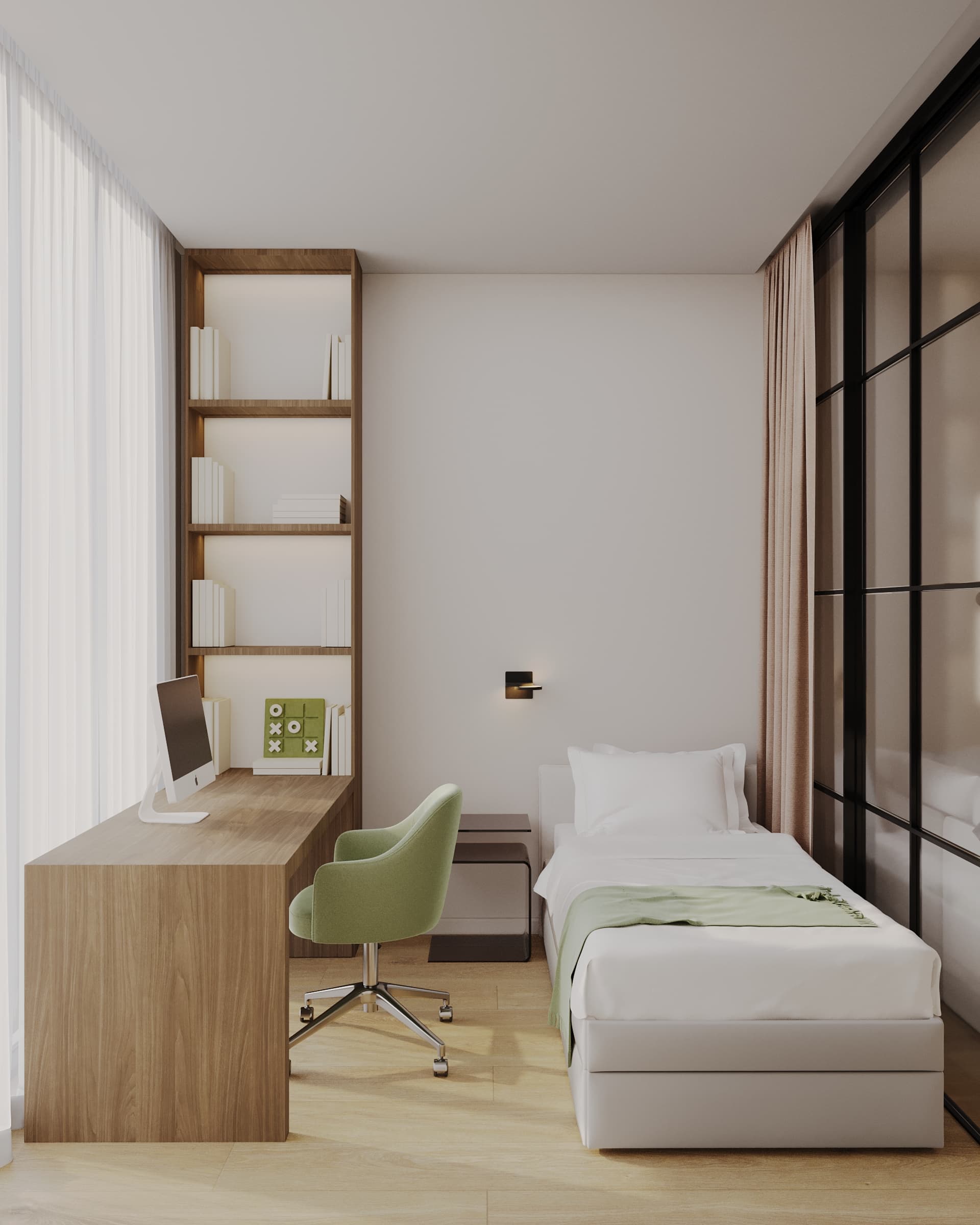
Astana is a city where an interior is tested by climate. Winter is long and windy, central heating runs for about seven months a year, and new apartments are handed over faster than owners can plan their renovation. All of this shapes the layout, the choice of materials, lighting and even how the entrance hall works.
We work in Astana with on-site measurement. In the capital we have designed apartments in Europe City, Aruna City and Dauir, a kitchen-living room in a country house, the Oshak Coffee and Sheker cafés, a 400 m² banquet hall and school accommodation. Here is what to consider if you are planning a renovation in Astana.
Astana's climate in numbers
Astana is one of the coldest capitals in the world. According to Kazhydromet, the average January temperature is around −14 to −16 °C, nights often drop below −20 °C, and the historical low, recorded in 1893, is about −52 °C. Winter brings strong winds and snowstorms, while summers can be hot.
The heating season usually runs from about late September to mid or late April. The city akimat sets the dates each year and switches heating off once the daily average stays at +10 °C or above for several days. For an interior this means half a year of radiators, closed windows and dry air.
Windows, curtains and drafts
Windows are the main source of heat loss. If the developer installed basic units or the installation looks questionable, fix it before finishing, not after. Check the seals, reveals and sills: freezing and condensation show up quickly in winter, and redoing reveals over fresh paint is expensive.
Curtains in Astana are more than decor. Heavy drapes in a concealed ceiling recess noticeably reduce the cold feeling from the glass in the evening. We plan the curtain recess on the ceiling plan so curtains run floor to ceiling with no gap at the top. Don't block the radiator under the window with a deep sill or furniture: warm air must rise along the glass, or it will fog up.
Dry air and materials
During the heating season indoor humidity drops. The interstate standard GOST 30494-2011 names 30–45% as optimal for living rooms in winter, and with strong heating actual levels are often lower. People suffer, and so do materials: solid wood and parquet shrink, gaps appear, and solid doors and fronts can warp.
So in the project we decide in advance where a humidifier will stand and whether there is a socket nearby, and for flooring we look at stable options: engineered boards, good laminate, luxury vinyl or porcelain tile. If you want solid wood, manufacturers usually specify an acceptable humidity range, and it should be maintained all year. In bedrooms and nurseries, plan a humidifier from the start.
Underfloor heating and loggias
Underfloor heating in the bathroom and entrance is almost standard in Astana: unheated tile by the door is cold in winter and slow to dry after wet boots. On an insulated loggia, floor heating helps turn it into a workspace or lounge. Joining a loggia to a room or moving a radiator, however, requires approval, so check with the akimat and the management company before work starts.
We show the underfloor heating layout and thermostat positions on a separate sheet of the working drawings. That matters: no heating is needed under the bed, built-in wardrobes or kitchen units, and the electrical load should include the floor heating from day one.
An entrance hall for a long winter
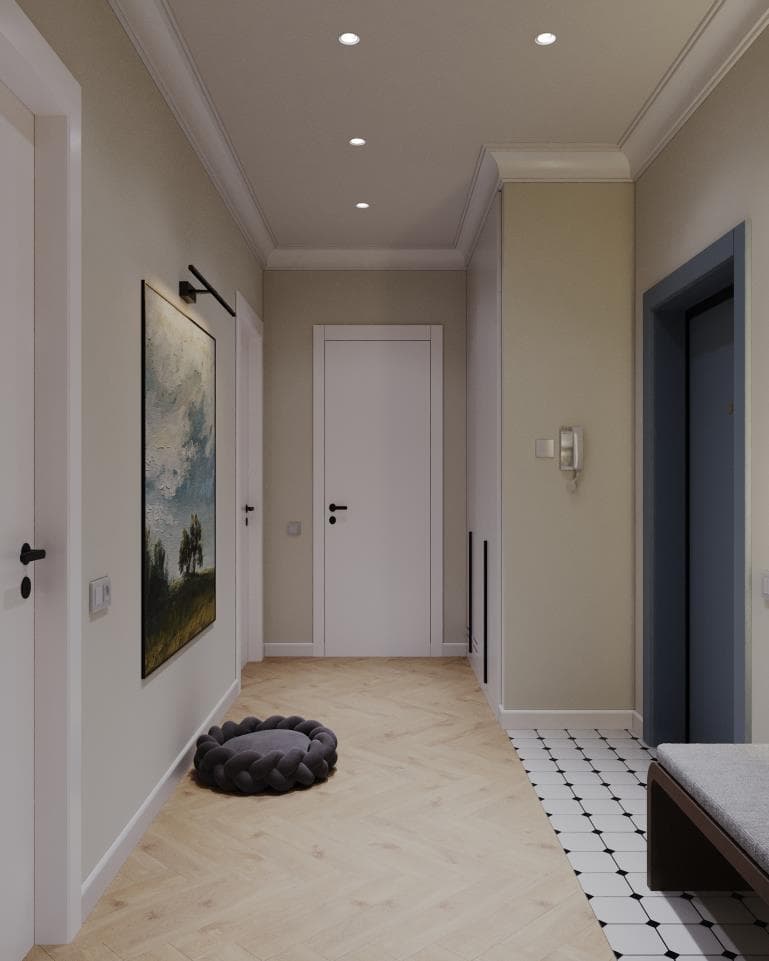
In winter the hallway takes down jackets, heavy boots, snow and de-icing salt. That's why we plan a more serious entrance in Astana than in southern cities: a wardrobe about 60 cm deep for outerwear, a separate spot for wet shoes with a tray or grid, a bench for putting shoes on, and hooks for clothes that need to dry.
The floor by the door should be tile or porcelain only, not laminate, which water and salt will ruin quickly. A good approach is a tiled area of about a meter from the door with a clean edge, turning into parquet or laminate in the corridor. A storeroom or niche is handy for sleds, skis and winter tires.
Light for short winter days
Winter evenings come early in Astana, and an apartment spends many hours under artificial light. A single ceiling fixture gives flat, dreary light. We design several scenes: general light, task light in the kitchen and at the desk, soft cove and niche lighting, floor and wall lamps for the evening.
Living rooms usually get a warm color temperature of about 2700–3000 K, work areas slightly more neutral. Lights and switches are planned on the lighting plan and control diagram so scenes are easy to switch on without walking through a dark room.
New builds: what to check
Most of our Astana clients receive an apartment in a new building with a shell or pre-finish handover. Before renovation, do a proper inspection: windows, screed, walls, ventilation and risers. Our Checklists section has a dedicated apartment handover list so nothing is missed.
The second point is timing. In a new building neighbors renovate at the same time, contractors are busy, and furniture lead times can grow. The sooner the project with drawings and schedules is ready, the easier it is to get accurate quotes and order furniture early.
Our projects in Astana
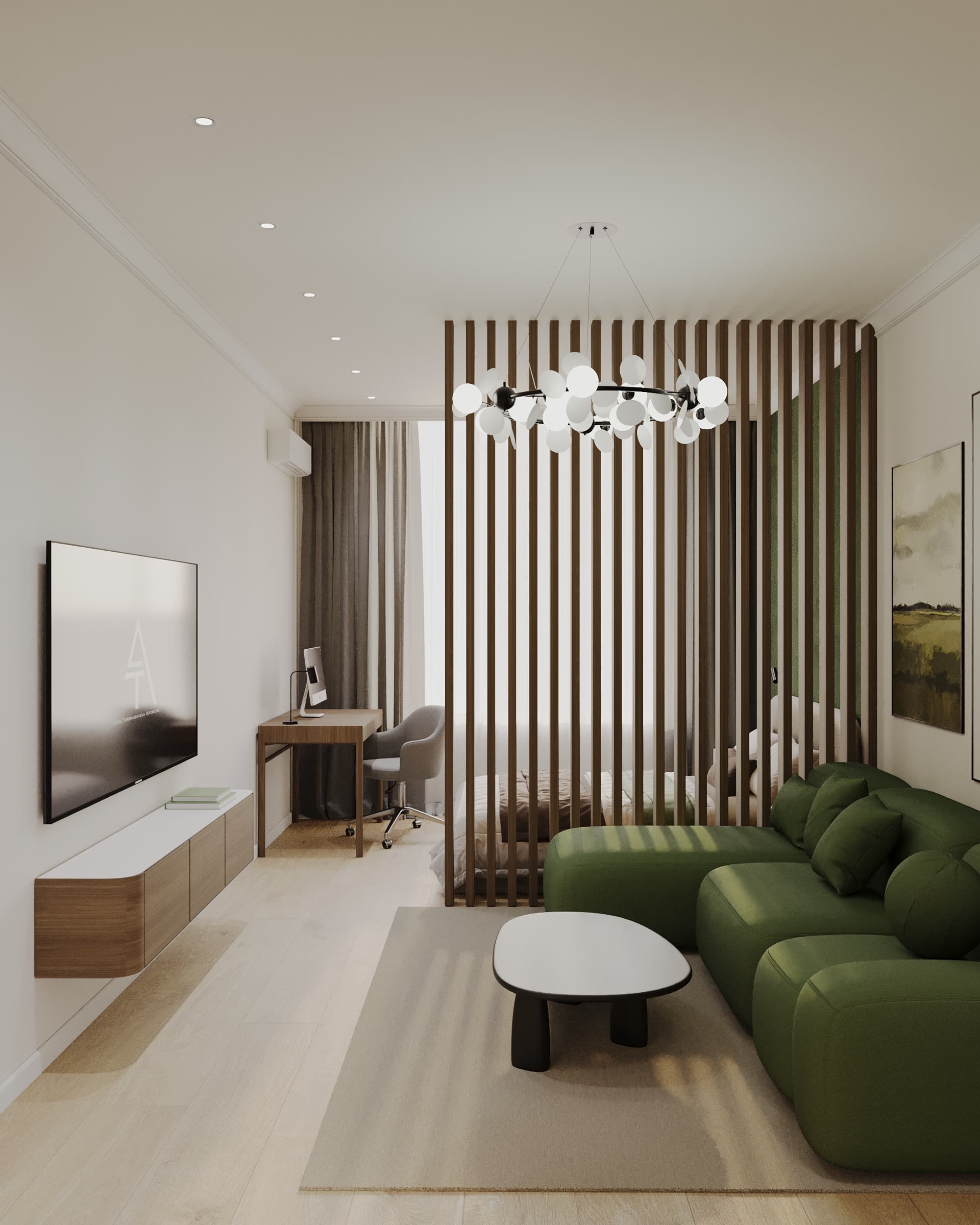
The 110 m² apartment in Europe City is a contemporary family project: children's rooms designed to grow with the kids, and glass partitions that give parents visibility and children quiet. The studio led this project from working drawings to decor styling. The 46 m² apartment in Aruna City shows how to fit a bedroom, living room and workspace into one room, zoned with slats instead of walls.
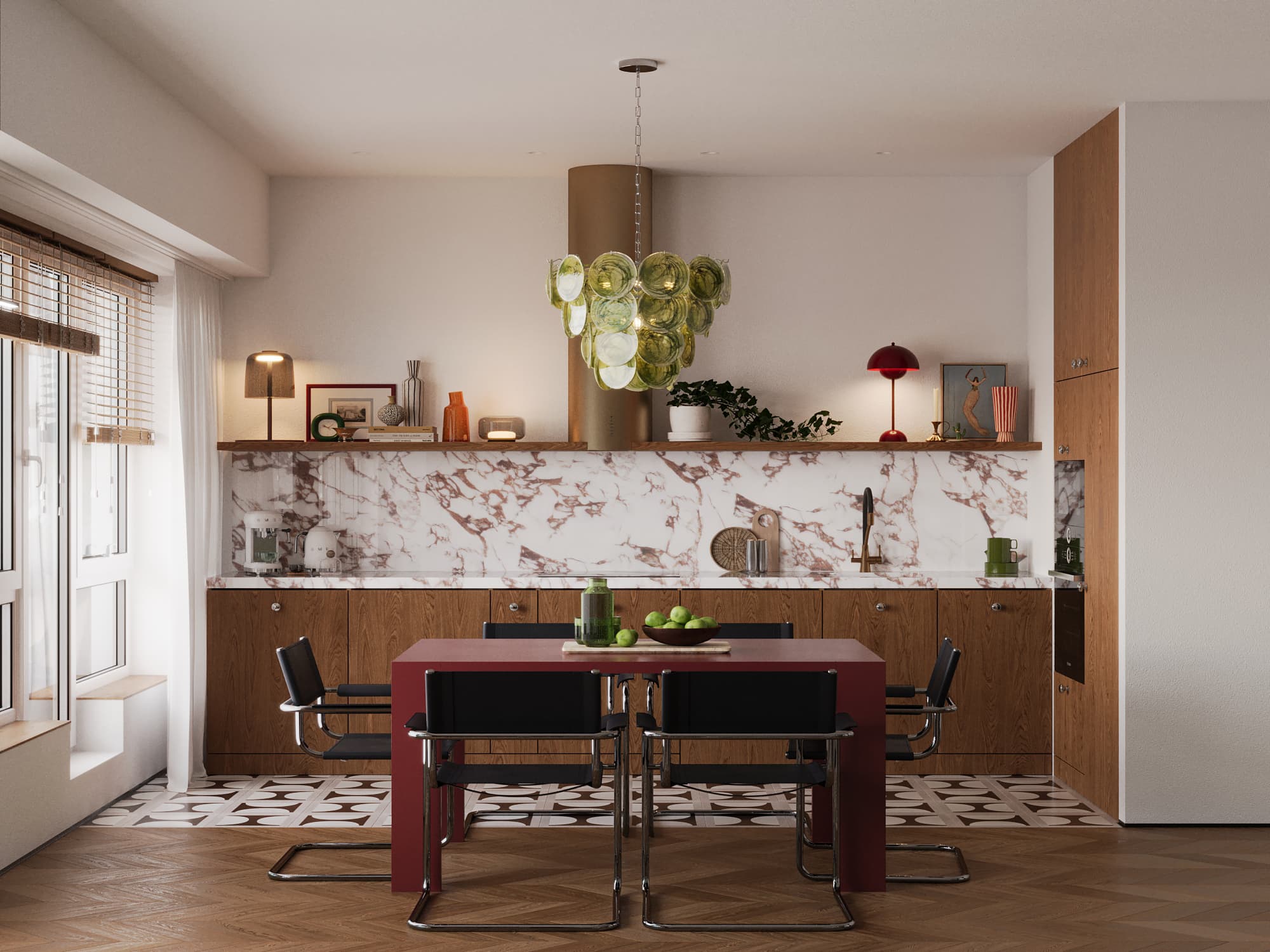
The 38 m² apartment in Dauir is a completed project in French chic with arched openings, a checkerboard hallway floor and mouldings. Near Astana we designed a 40 m² kitchen-living room in a country house in soft neoclassical style; the kitchen was built from our drawings. The commercial portfolio includes the 20 m² Oshak Coffee, the 24 m² Sheker café, a 400 m² banquet hall and school accommodation with hard-wearing finishes.
Prices and timelines
Our prices in Astana are the same as in Almaty. Working drawings: up to 40 m² — a fixed 100,000 ₸; 40–200 m² — 3,300 ₸ per m²; over 200 m² — 2,200 ₸ per m². A design project with 3D visualization, custom furniture drawings and online sourcing: up to 40 m² — 300,000 ₸; 40–200 m² — 10,000 ₸ per m²; over 200 m² — 7,200 ₸ per m². Designer supervision is 200,000 ₸ per month.
A design project usually takes 2–4 weeks: questionnaire and measurement 1–3 days, layout up to a week, concept and renders 1–2 weeks, then drawings. Working drawings for spaces up to 60 m² take 3–7 days. We design but don't do construction, so the renovation budget is counted separately; our renovation budget calculator helps with that.
Summary
A good interior in Astana starts with the climate: warm windows and curtain recesses, stable materials and humidification, a serious entrance hall, underfloor heating and well-planned light for the long winter. Browse our Astana projects in the portfolio, estimate the cost in the calculator, and fill in the project brief or message us on WhatsApp to arrange a measurement.