September 4, 2026
Buying Materials: How to Purchase from a Schedule and Not Overpay
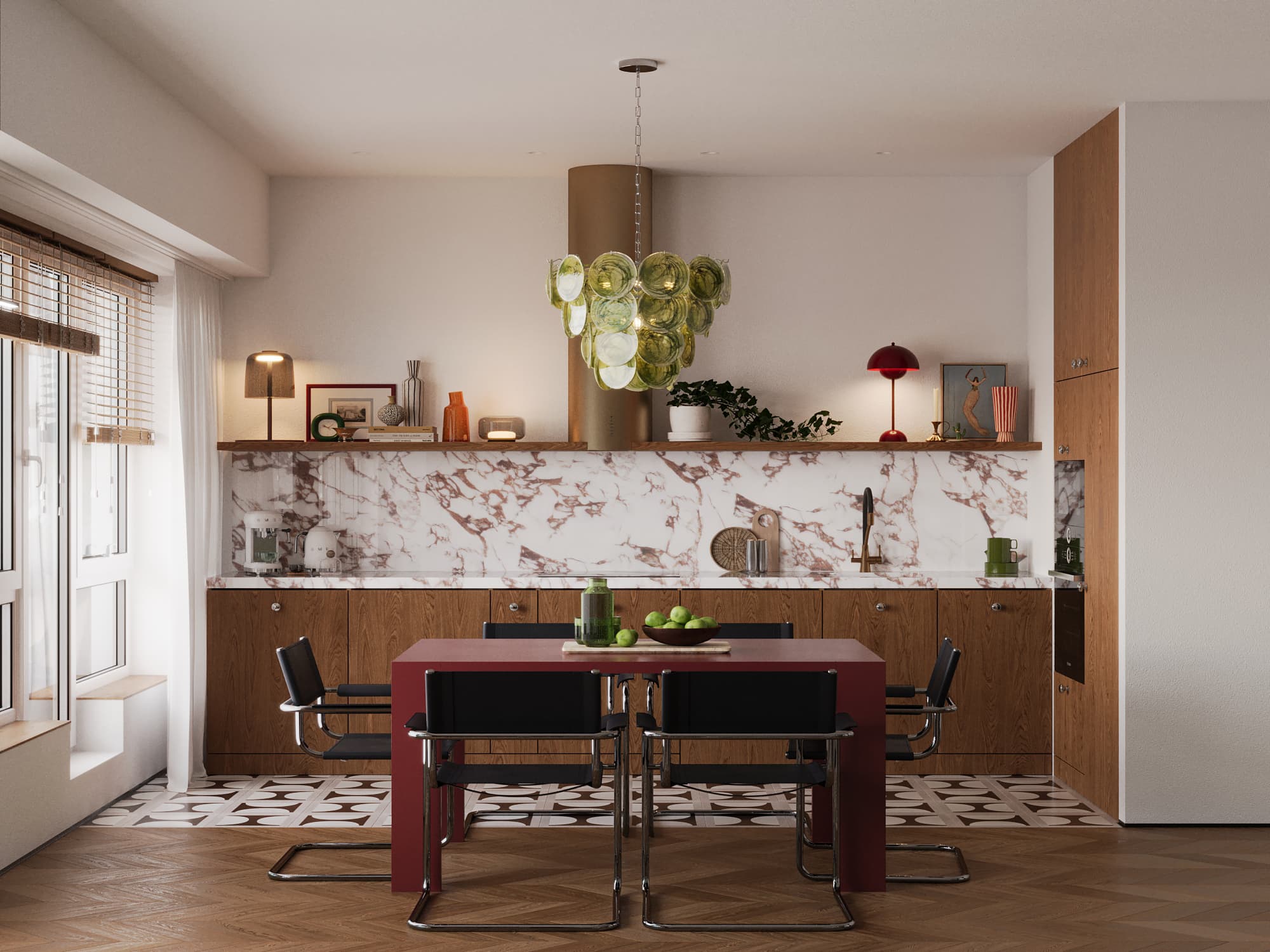
Clients who went through a renovation without a project remember purchasing as the most exhausting stage: dozens of trips, "take extra just in case", wrong shades and a warehouse of leftovers on the balcony. With schedules from the project, purchasing becomes logistics: what, how much, for which stage. A client of the Bukhar Zhyrau project specifically noted this accuracy: the materials were used up with nothing left over.
In this article we cover how to build a purchasing schedule, how much extra to buy, how to avoid mismatched batches and where you can really save.
Start with the schedule
The basis of purchasing is the schedules from the working project: the wall finishing schedule, the floor and ceiling plans, the plumbing fixtures plan and the lighting plan. They give the list of materials, areas and quantities. Without them every shop and every crew counts by eye, and you buy some things twice and others in insufficient amounts.
Turn the schedules into one table: material, article or collection, quantity with allowance, supplier, delivery time, the stage that needs the material, and status (chosen, ordered, paid, delivered). Such a table replaces a hundred messages in a messenger and shows what is holding up the site.
Order of purchases
Buy for the stage, not everything at once. Rough materials (mixes, profiles, pipes, cable) are needed at the start of the work. Tile and doors are ordered 2-4 weeks before their stage because delivery times can be longer than expected. Lighting, plumbing and furniture are bought in parallel with finishing, and anything coming from abroad must be ordered first.
A typical mistake is to buy everything at the start. The materials sit, take space, deteriorate or turn out to be wrong after decisions change. The reverse mistake is to delay ordering, and the crew stands idle. Keep the rule: before a stage starts the material is on site, but not earlier than a week or two before it if there is no storage.
Allowances by material
An allowance covers cutting, breakage and defects. Benchmarks used by manufacturers and calculators: tile +10-15% for straight laying, 15-20% for diagonal and herringbone; laminate and parquet about 5% for straight laying, 10-15% for diagonal and 15-20% for herringbone. In rooms of complex shape with niches and projections add a few more percent. For large formats the waste can be higher.
Paint: count by the coverage per m² from the datasheet and the number of coats, plus a spare can for touch-ups a year later. Wallpaper: by rolls taking the pattern repeat into account, plus one roll. Skirting and casings: with a margin for joints and cutting. More allowance means money sitting on the balcony; less means the risk of topping up from another batch.
Batches, shades and calibre
The main rule for tile and flooring: the whole volume from one batch, and the batch number on the boxes must match. Another batch can differ in tone even from the same manufacturer. Before buying, ask the warehouse to confirm the required quantity is available in one batch, and for ordered deliveries fix the batch number in the contract or invoice.
Paint is tinted in one mix with a reserve because re-tinting can give a different shade. Wallpaper is likewise taken from one batch. For tricky materials (large-format porcelain, patterned tile) look at samples in daylight and in evening lighting: the shade changes.
Delivery, lifting and acceptance
It is better to save on logistics than on materials. Delivery in one truck instead of five, lifting agreed in advance with the management company, the lift or freight hoist booked. Clarify the time of entry to the residential complex and the rules for the days and hours allowed for construction work.
At acceptance check everything at once: quantity, integrity of the boxes, batch number, article, shade. If something is wrong, record it on the spot with photos and in the delivery note. Opened tile boxes are best inspected before laying: a month later a claim is received worse. Store materials in a dry level place, and keep tile and laminate in their packaging rather than standing on the floor.
Where to save and where not to
You can save on: invisible materials with clear specifications (underlays, fixings, mixes from a decent brand), seasonal sales at trusted suppliers, delivery shared with other buyers, collection remnants if one batch is enough.
Do not save on: waterproofing, pipes and cable, plumbing fittings, tile substrates and adhesive, kitchen and wardrobe hardware. Here cheap turns out expensive: leaks and rework eat the whole difference. For a renovation with materials in Almaty and Astana in 2026 the benchmarks are: from 150,000 ₸/m² economy, about 250,000 ₸/m² comfort, from 450,000 ₸/m² premium; furniture and appliances separate; a 10% reserve. Buying by schedule helps to stay within these limits.
What to do with leftovers and receipts
Keep receipts, delivery notes and leftovers until the end of the renovation and beyond. Leftover tile, skirting, paint and wallpaper will help repair local damage: touching up a scratch with the same paint a year later is priceless. Label the cans: room, colour, date and tint code. If you return something, do it within the shop's terms while the packaging is intact.
How we help with purchasing
The design project includes online procurement: a list of materials, furniture and lighting with purchase links tied to the project. In author supervision we help with selecting finishing materials and sourcing lighting, furniture and plumbing from China, and we report deviations within 24 hours. We do not sell the materials and do not carry out construction works: you buy from suppliers by a verified schedule.
Conclusion
Purchasing becomes a calm process when you have a schedule, a plan by stage, allowances by the norms and batch control. Make a purchasing table before the work starts, check every delivery and save on logistics rather than on hidden materials. If you want a project with schedules and procurement, fill in the project brief or message us on WhatsApp.