June 12, 2026
How to Choose a Renovation Crew: a Checklist from Design Supervision Practice
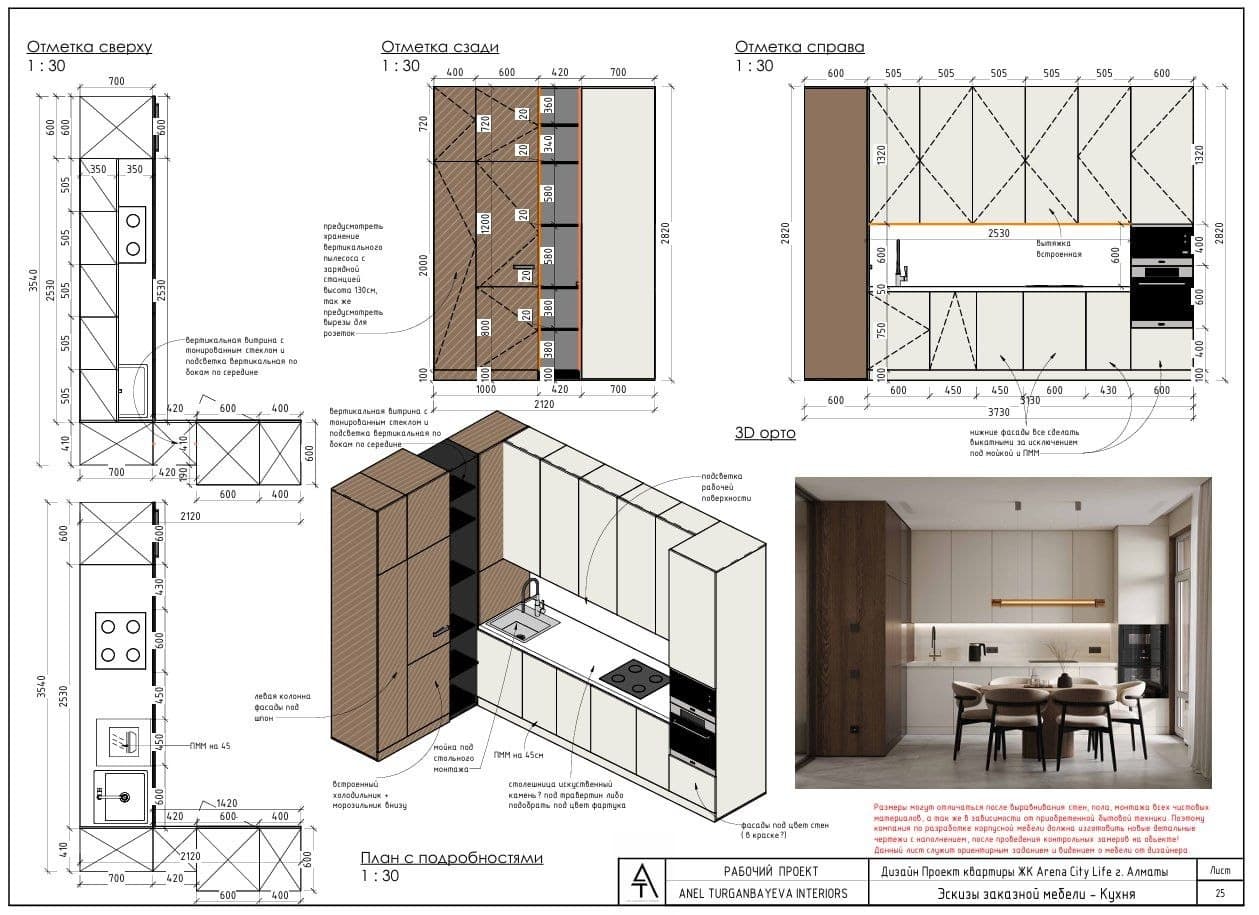
During design supervision we work side by side with the crews our clients hire and see their work from demolition to finishing: which promises come true and which do not. The studio itself does not carry out renovation — we design and check that the site is built to the drawings. So we look at crews from the client's side, with no interest in any particular contractor.
This experience has produced a filter. It does not guarantee a perfect renovation, but it screens out most problems before the contract is signed. Below: where to find tradespeople, what to ask at the first meeting, how to check a contractor, how to compare estimates, what to put in the contract and how to pay.
Crew, foreman or company: what is the difference
A private crew is a few tradespeople with a lead. Usually cheaper, but quality depends heavily on specific people, and the contract is often with an individual or absent altogether. A foreman with his own subcontractors organises electricians, plumbers and tilers himself and is responsible for the schedule. A renovation company is a legal entity or sole proprietor with a contract, warranty and purchasing; more expensive, but there is someone accountable.
There is no universal answer. For a small cosmetic refresh, a private crew with good references may be enough. For a full renovation with relocated services, underfloor heating and complex finishes, we recommend someone responsible for the whole scope and willing to work under a contract and to drawings.
Where to look
The best source is recommendations from people who recently finished a renovation and have lived in it for at least a few months: by then you can see how the tiles, grout, screed and wiring behave. The second source is residential complex chats: in new buildings in Almaty and Astana the same crews often work in several apartments, and neighbours readily share their experience. Ads and social media work too, but need extra checking: nice portfolio photos say nothing about what is hidden under the finish.
Six questions for the first meeting
Show me your sites. Not only photos, but the address of a finished renovation or a site in progress you can visit. An honest crew has no problem with that. On a live site look at tidiness, material storage and protection of finished surfaces — it says more about their work culture than a portfolio.
Who exactly will work. "We have all the specialists" should mean a specific electrician, plumber and tiler, not one jack-of-all-trades. Ask who will be on site every day and who is responsible for the schedule.
Have you worked to a design project. A crew used to drawings reads documentation, asks questions about details and does not argue with every dimension. Ask how they handled someone else's project before.
How is the estimate calculated: line by line with quantities and unit prices, not a single turnkey figure. Who buys materials and how they are paid for. What the deadlines are for each stage and what happens if one runs late. And what warranty they give on the work and how it is documented.
How to check a contractor
If the contractor works as a sole proprietor or LLP, their registration can be checked online by IIN or BIN: for example, through the taxpayer search service on the State Revenue Committee website or on egov.kz. It shows whether the business is registered, since when, and whether it has been deregistered. Check that the name and number in the contract match what the service shows.
Talk to two or three past clients. Do not ask "did you like it?", ask specifically: did they stay within the estimate and deadlines, how much extra work was there, how were problems solved, did they come back for warranty calls. Everyone has one unhappy client, but a recurring story about missed deadlines is a serious signal.
A tender based on drawings: how to compare estimates
Comparing two estimates without a project is almost impossible: one crew included levelling walls with guide beads, the other "skim as needed"; one counted 20 sockets, the other 35. The one who counted less wins, and the difference resurfaces as extra work.
The best filter is a tender. With a set of working drawings (demolition and construction plans, electrical, lighting, plumbing, floors, ceilings, finishes schedule) you give two or three crews the same brief and get comparable estimates for the same scope. Then you can see where someone forgot an item and where someone inflated the price.
When comparing, check: are all rooms and types of work included; do the quantities match (wall area, number of electrical and plumbing points); what is included in the price — debris removal, carrying materials upstairs, rough materials; who pays for delivery. A suspiciously low estimate almost always means part of the work will be "added" later.
What to put in the contract
The contract is not a formality but your main tool. It should include: the parties with their details (IIN/BIN), the site address, the scope of work with reference to the estimate and project, start and finish dates by stage, the price and payment terms, who buys materials and how, how stages are accepted, how the scope can change, the warranty period and how defects are fixed, liability for delays and damage to property.
Separately agree on building rules: hours for noisy work, debris removal, protecting the lift and common corridors. In new buildings these rules are usually set by the management company or homeowners' association — check them before starting so work is not stopped halfway. Specific legal questions are best checked with a lawyer: we share practice, not legal guarantees.
Red flags
A large prepayment for work before it starts. Normal practice is paying for completed and accepted stages, with advances only for specific materials against receipts. "We can start tomorrow": a good crew usually has a queue. An estimate noticeably lower than others for the same scope. Refusing a contract or a contract without an estimate. Answering "we will do it the usual way" to questions about details. Unwillingness to work to drawings or an offer to "simplify" the project without explaining why. A lead who cannot say who will do the electrics.
Money and acceptance: rules that save your nerves
Pay by stage: demolition and partitions, rough electrics and plumbing, screed and plaster, finishing. Each stage after acceptance. Keep a reserve until final acceptance, usually 10–15% of the labour cost: it is an incentive to fix minor defects. All changes and extra work in writing, with price and deadline, even if it is a messenger message with confirmation.
Accept hidden work (wiring in walls, pipes under screed, waterproofing) before it is covered, and photograph it with dimensions — these photos will be useful for years. For stage-by-stage checks use our works acceptance checklist. If the site has design supervision, we visit at least once a week, keep photo and video records and report deviations from the project within 24 hours — this greatly reduces the risk of a mistake being hidden under the finish.
Summary
A good crew is chosen not by price or photos but by a transparent estimate, a contract, verified references and willingness to work to drawings. A tender based on working drawings makes estimates comparable, and stage payments with a reserve keep the process under control. If you want drawings for a tender or supervision during the renovation, see the Prices section, fill in the project brief or message us on WhatsApp.